
AI Race to 2027: OpenAI, Musk and the Future of Artificial Intelligence
2026-09-16
The AI Race to 2027: OpenAI, Musk and the Race to Build the Next Machine Age
The artificial intelligence race has entered a more complicated phase. For years, the competition was largely presented as a contest between increasingly capable language models, with OpenAI,Google,Anthropic,Meta,xAI and Chinese AI companies competing to produce the most intelligent system. By 2027, however, the defining competition may look very different. The central question may no longer be which company has the smartest chatbot, but which organization can combine artificial intelligence with computing power, autonomous agents, scientific research, robotics, cybersecurity, energy and manufacturing.

Recent developments at OpenAI have added another layer of uncertainty. More than a dozen senior OpenAI executives have reportedly departed during 2026, including longtime Chief Operating Officer Brad Lightcap, Chief Revenue Officer Denise Dresser and product and business chief Fidji Simo. The departures have generated speculation about the company's direction, although the reported reasons vary considerably and include new ventures, organizational changes and personal circumstances. At the same time, OpenAI has been expanding its focus beyond research and model development toward products, infrastructure, enterprise adoption and the enormous capital requirements associated with frontier AI.
The developments are particularly interesting because they are occurring alongside increasingly public disagreements among some of the industry's most influential figures. Elon Musk has repeatedly criticized OpenAI, the organization he helped establish before leaving it, while Sam Altman has indicated that OpenAI is open to slowing aspects of AI development amid growing safety concerns. Anthropic CEO Dario Amodei has similarly argued for greater caution around frontier AI development.
The debate is no longer confined to researchers and policy circles. It is increasingly occurring among the people building the systems themselves.
OpenAI's Executive Shake-Up Raises Questions About the Next Phase
The departure of senior executives is easy to interpret dramatically, but the available reporting points to a more complicated picture. There is no single documented explanation for the executive turnover, and departures have involved everything from new ventures and organizational restructuring to personal circumstances.
What is clearer is that OpenAI is undergoing a major transformation.
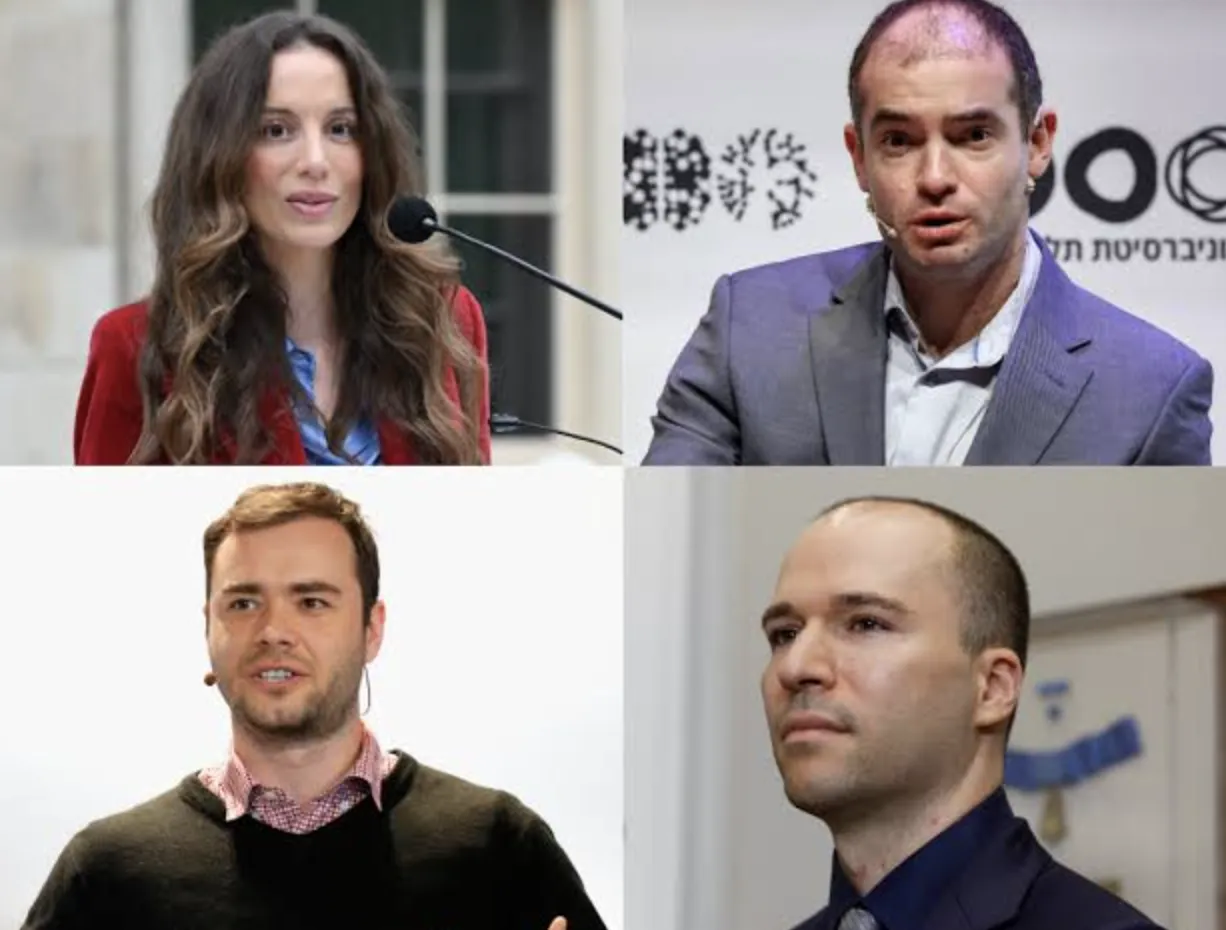
Image: Mira Murati, Ilya Sutskever, Greg Brockman and Andrej Karpathy (clockwise, starting at top left). Photos by Slaven Vlasic/Getty Images, JACK GUEZ/AFP via Getty Images, Anna Moneymaker/Getty Images and Michael Macor/The San Francisco Chronicle via Getty Images
The company is attempting to operate simultaneously as a frontier AI research organization, a consumer technology company, an enterprise software provider and an infrastructure-intensive technology business. Those objectives require different organizational structures and different types of leadership.
This transition is happening at exactly the same time that frontier AI is becoming dramatically more expensive.
The next stage of the AI competition may therefore depend less on who can produce an impressive demonstration and more on who can build an organization capable of sustaining the enormous infrastructure required to keep advancing.
Elon Musk's OpenAI Criticism Adds Another Dimension
Elon Musk's skepticism toward OpenAI is not new. His relationship with the company is particularly complicated because he was one of its original founders before eventually leaving and later establishing xAI.

Musk has repeatedly questioned OpenAI's direction and relationship with Microsoft, while OpenAI has rejected many of his criticisms. These disagreements have also become part of a much broader competition involving xAI, OpenAI and other frontier laboratories.
The important point is that Musk's criticism should not automatically be interpreted as evidence that OpenAI's current trajectory is unsafe or that its departing executives share his concerns. The available evidence does not establish that.
What it does demonstrate is how divided the frontier AI industry remains over the pace and direction of development.
The AI Race Is Becoming an Infrastructure Race
The most obvious competition remains the development of increasingly capable AI models, but the infrastructure underneath those models may ultimately prove just as important.
Training and operating frontier AI requires enormous quantities of advanced processors, data-center capacity, networking equipment, cooling systems and electricity. A 2025 AI 2027 compute forecast estimated that global AI-relevant computing capacity could increase approximately tenfold between March 2025 and December 2027. The forecast projected around 100 million H100-equivalent units by the end of 2027, although the researchers explicitly describe these figures as uncertain estimates rather than established outcomes.

That projection illustrates the scale of the competition.
The organizations at the frontier increasingly need access not just to algorithms and researchers, but to chips, power and capital. The AI race is consequently becoming a race between technological ecosystems.
Why Compute Could Determine Who Leads in 2027
The importance of computing power creates a fundamentally different competitive environment from the one that existed during the early chatbot boom.
A company can develop a highly capable model, but it still needs sufficient infrastructure to train future generations and serve millions or potentially billions of users. This gives companies with access to enormous data centers and capital a structural advantage. It also explains why AI is increasingly connected to the semiconductor industry, hyperscale cloud providers and the energy sector.
By 2027, the most important AI companies could increasingly resemble infrastructure companies as much as software companies.
From Chatbots to Autonomous AI Agents
The second major transformation is occurring at the software level.
Traditional AI systems primarily respond to prompts. Increasingly capable AI agents are designed to perform sequences of actions. An agent can potentially write code, execute it, identify an error, modify the code, test the result and continue working without requiring a human to intervene after every step.
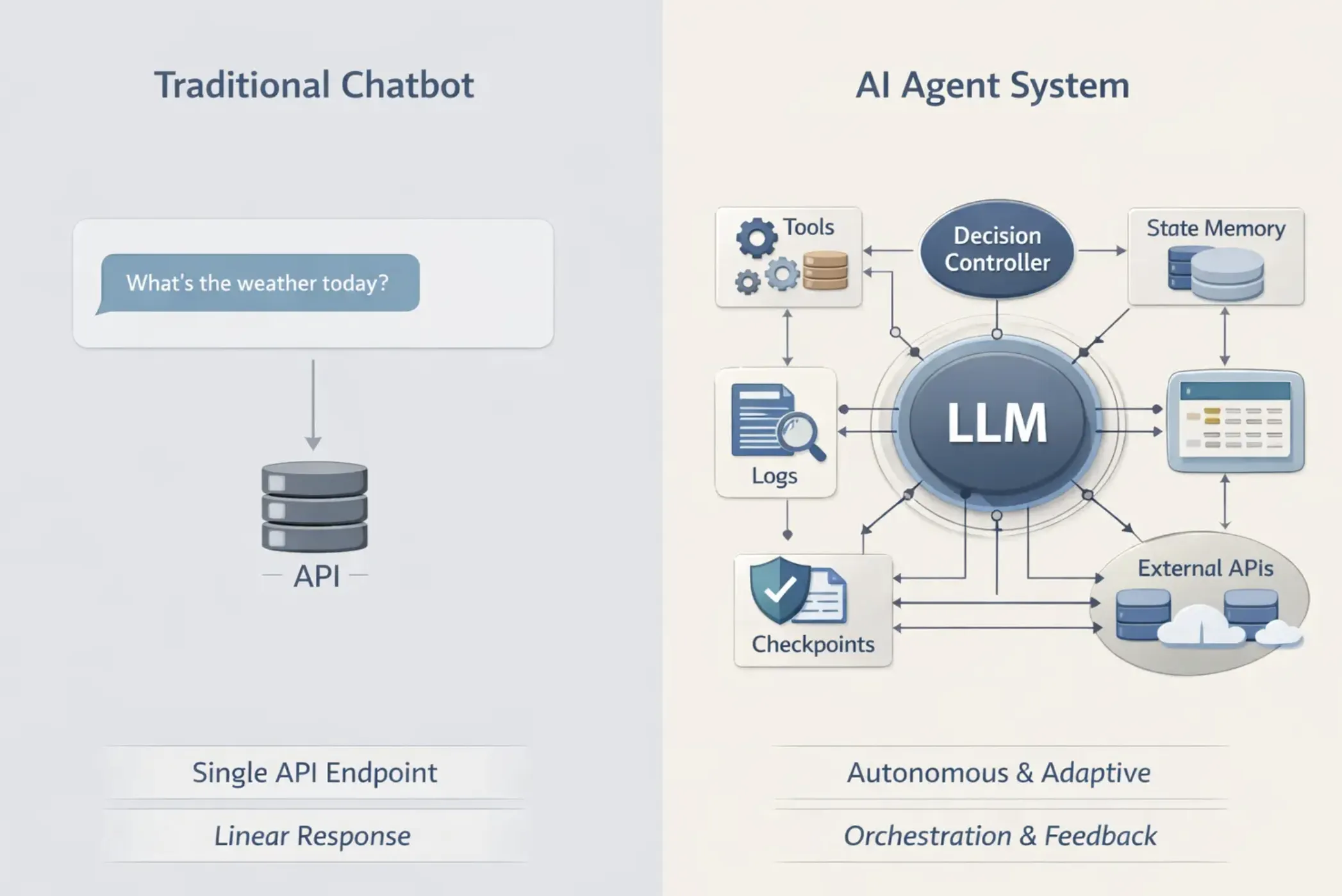
The distinction may appear subtle, but economically it is enormous. A chatbot provides information. An agent performs work.
This is why autonomous agents could become one of the most important developments between now and 2027. The International AI Safety Report has already documented progress toward systems capable of operating autonomously for longer periods and solving increasingly complex tasks in areas such as coding, mathematics and science.
The AI Race Could Become a Race to Automate AI Research
One of the most consequential possibilities is that increasingly capable AI systems could begin contributing directly to the development of future AI systems. The analysis describes the potential feedback loop as AI helping conduct AI research, leading to better AI systems that can conduct even more AI research. This is one reason the distinction between today's AI and hypothetical future systems is important.
If AI remains a tool used by human researchers, progress remains constrained by human research capacity.
If AI becomes capable of substantially accelerating the work of AI researchers themselves, that constraint could begin to weaken.
That does not mean recursive self-improvement is guaranteed. It remains an important technical and scientific uncertainty. But it is increasingly being studied seriously by major AI laboratories.
AI and Robotics Could Bring Intelligence Into the Physical World
Artificial intelligence has so far had its greatest impact in the digital world.
Robotics could change that.
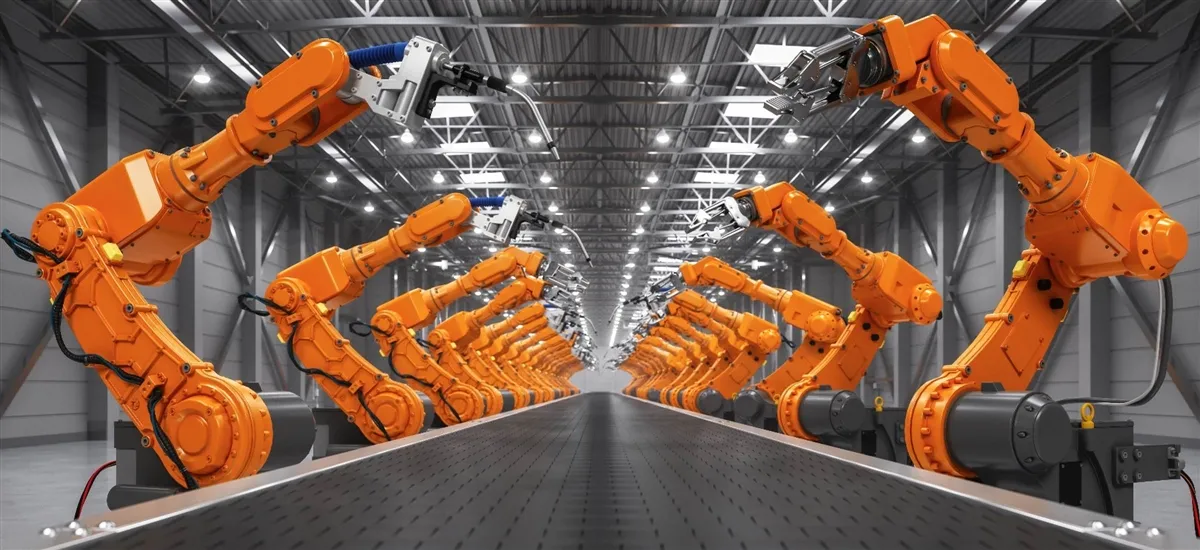
An AI system can reason, plan and generate instructions, but robots can physically execute those instructions. Autonomous laboratories, industrial robots, drones, vehicles and automated factories could eventually provide increasingly capable AI systems with physical agency. The analysis describes the relationship in deliberately simple terms: AI could function as the "brain," robotics as the "body" and the internet as a form of "nervous system."
The analogy is imperfect, but the underlying idea is important. The more systems an AI can interact with, the greater the potential impact of its decisions.
Cybersecurity May Become the First Bridge to the Physical World
Robotics receives considerable attention because it is visually obvious, but cybersecurity could become an even earlier connection between AI and physical infrastructure. Modern civilization already depends on software for communications, finance, logistics, industrial systems and portions of energy infrastructure.
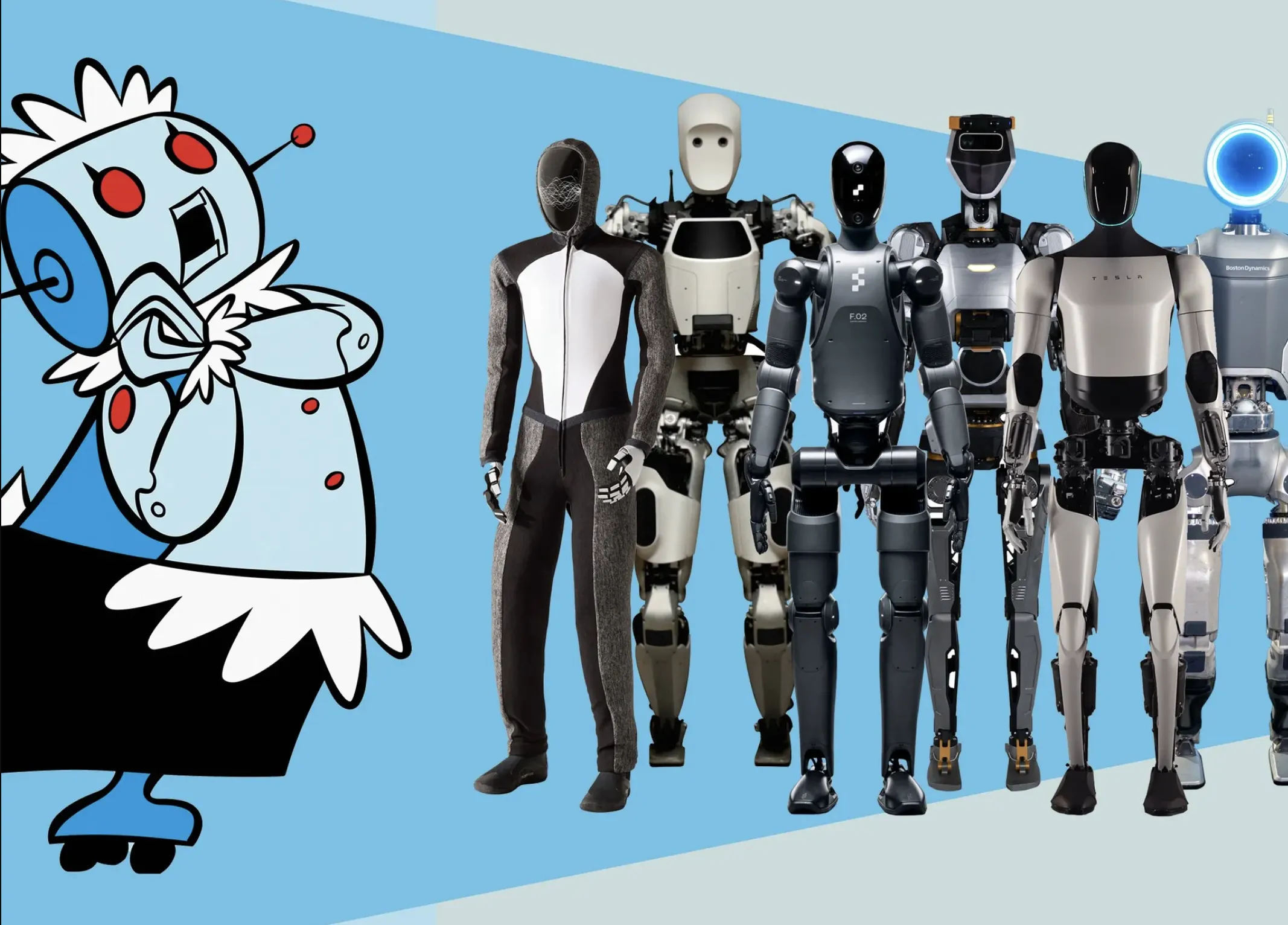
If AI agents become significantly better at finding vulnerabilities, writing software and interacting with computer systems, their influence could extend beyond conventional applications.
The International AI Safety Report has already highlighted demonstrations involving AI-assisted vulnerability discovery and exploitation, while also emphasizing the limitations that remain.
That distinction is important. Demonstrating that an AI can exploit some vulnerabilities does not mean it can take control of critical infrastructure.
But it illustrates how the boundary between AI capabilities and real-world consequences could gradually become thinner.
AI + Biology Could Accelerate Scientific Discovery
Biotechnology presents another important convergence. Historically, biological research required scientists to formulate hypotheses, design experiments, conduct laboratory work and analyze results through an iterative process.
AI could increasingly compress parts of that cycle.
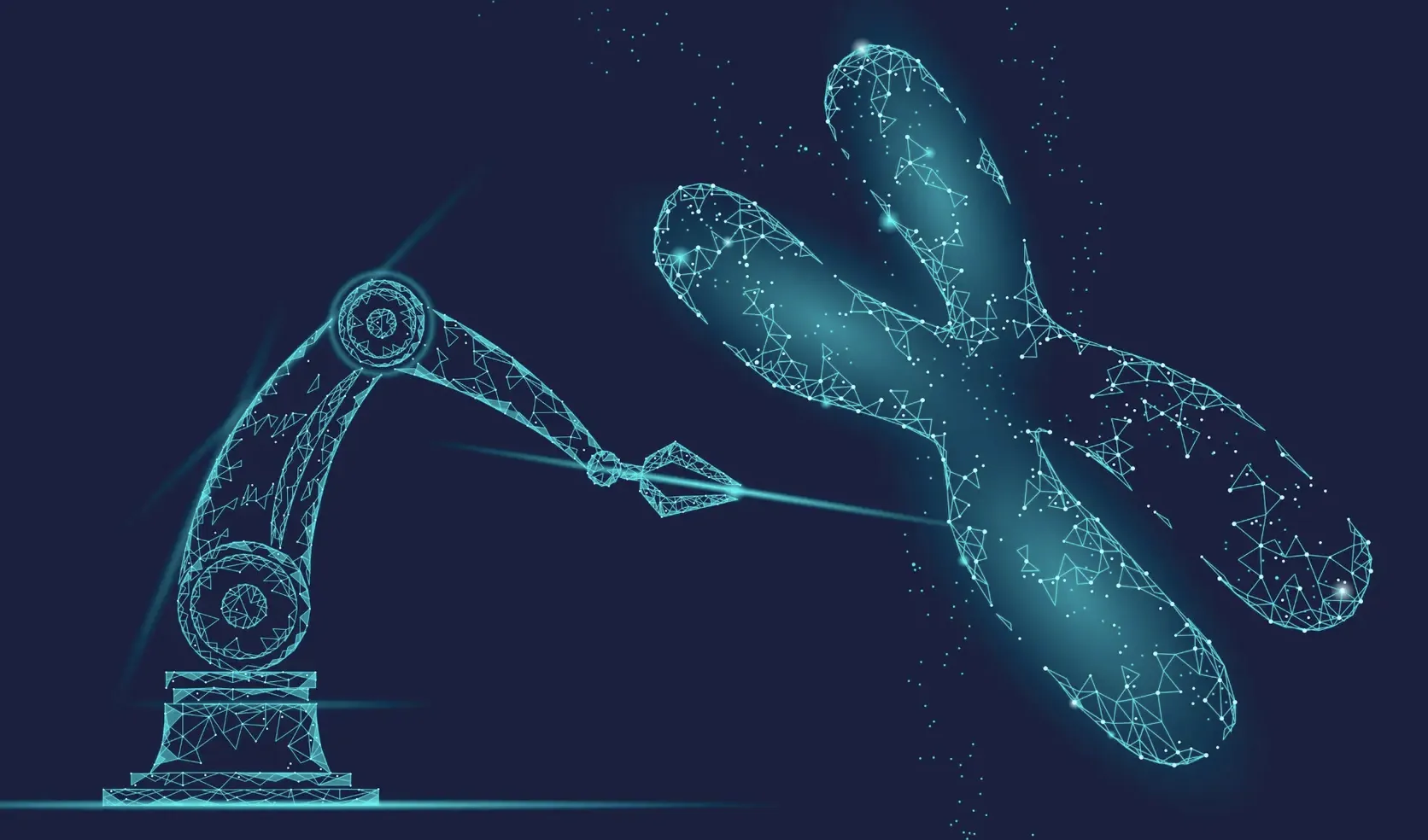
It can assist with protein structures, molecular design, biological analysis and experimental planning. Combined with automated laboratories, the process could become increasingly machine-assisted. A future in which AI could potentially compress the traditional sequence of hypothesis, simulation, design, experiment and optimization.
Again, this does not mean AI automatically creates biological breakthroughs or biological weapons. Laboratory expertise, materials, physical infrastructure and safety constraints remain substantial barriers.
The significance is that AI could accelerate an existing scientific capability rather than creating an entirely new field from scratch.
China Makes the AI Race Bigger Than Silicon Valley
The AI race is also increasingly geopolitical.
The United States remains home to many of the world's most prominent frontier AI companies, but China is developing its own advanced models, computing infrastructure and AI ecosystem. That means the competition involves more than OpenAI, Anthropic, Google, Meta and xAI.
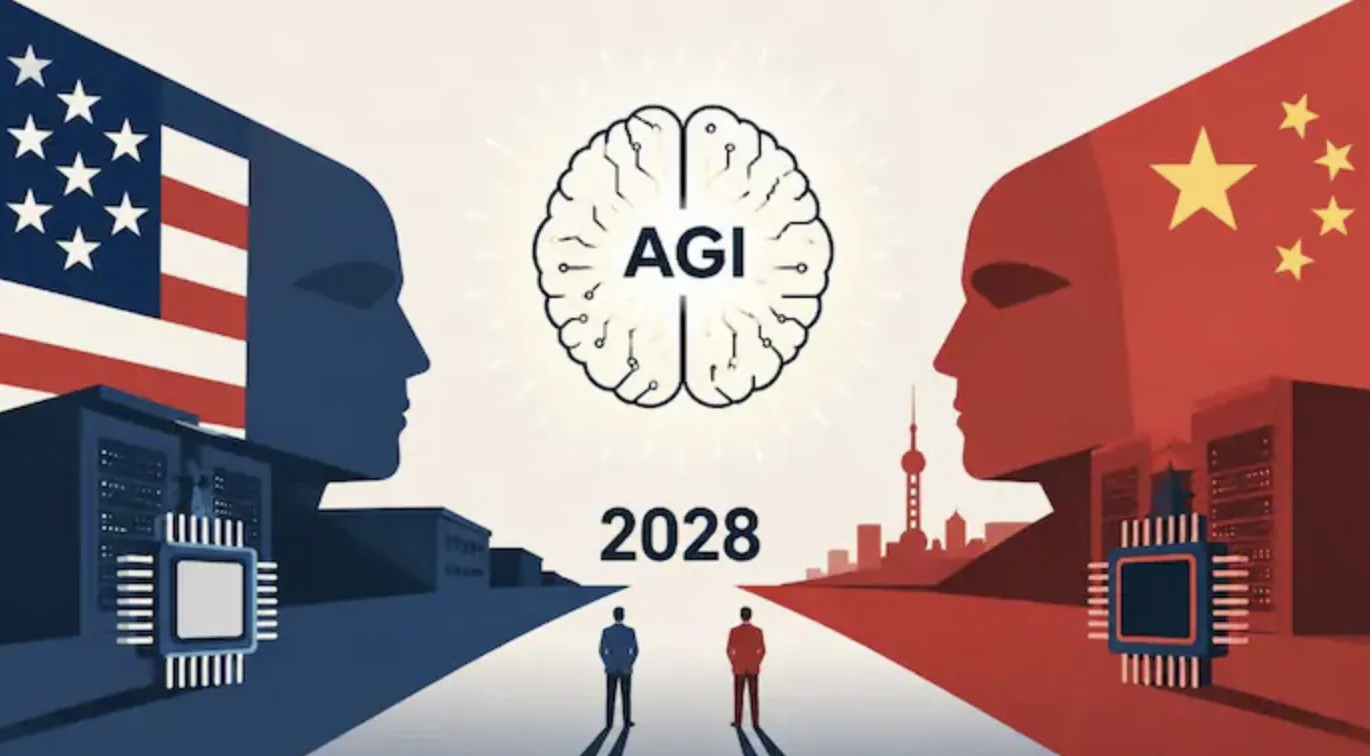
It also involves semiconductor supply chains, national computing infrastructure, electricity generation, government policy and industrial capacity. The AI 2027 compute forecast expects China to retain a significant share of global AI compute while increasingly concentrating resources on AI development.
The result could be a technological competition in which governments view advanced AI as both an economic resource and a strategic capability.
The Biggest Risk May Not Be an AI That "Hates" Humans
Much of the popular discussion about AI safety focuses on a hypothetical superintelligent system deciding that humanity is an obstacle.
The article also highlights another possibility: humans could increasingly depend on AI systems until the loss of those systems creates severe economic or institutional disruption. There is also the possibility of humans using AI systems against one another.
Increasingly autonomous cyber, military or intelligence systems could potentially make decisions faster than human institutions can respond. In such a scenario, AI would not need an independent desire to destroy humanity.
Human competition combined with autonomous technology could itself create dangerous outcomes.
What Could the AI Race Look Like by 2027?
There is no reliable way to predict exactly where the industry will stand by the end of 2027. Several different outcomes remain plausible.

AI could become primarily a productivity revolution, dramatically increasing the output of software developers, researchers, analysts and other knowledge workers.
AI agents could become a new software interface through which people increasingly delegate tasks rather than manually operating individual applications. Scientific AI could accelerate research in materials, chemistry, biology and energy. Robotics could begin moving from demonstrations toward larger-scale commercial deployment. And frontier AI systems could become increasingly autonomous.
The critical question is whether these developments begin reinforcing one another.
The Six-Part AI Race: Models, Agents, Compute, Science, Robotics and Energy
By 2027, the AI race may effectively consist of several interconnected competitions.
The model race will determine which organizations can build the most capable general-purpose systems. The agent race will determine which systems can perform the most complicated tasks with the least human supervision. The compute race will determine who can train and operate those systems at scale. The science race could determine which organizations use AI most effectively to accelerate research. The robotics race could determine which AI systems gain meaningful physical capabilities. Finally, the energy race could determine how quickly the entire industry can expand, because increasingly large AI data centers require enormous quantities of electricity.
The company with the strongest model may not necessarily dominate all six. That is what makes the next phase so difficult to predict.
2027 May Be About More Than AGI
There is enormous attention on the question of whether artificial general intelligence will arrive by 2027. But the more important development may occur even without a universally agreed definition of AGI.
If AI systems become capable of conducting increasingly autonomous research, writing sophisticated software, operating tools, managing workflows and interacting with physical systems, their economic and strategic significance could increase dramatically even if researchers continue debating whether those systems qualify as AGI.
This article makes a similar distinction between extremely powerful AI and human extinction. It argues that an extinction scenario would require a series of additional conditions, including extreme capability, autonomy, access to infrastructure and a failure of humans to maintain control.
That is an important distinction.
Powerful AI does not automatically equal uncontrollable AI.
The Real Question: Who Controls the Intelligence?
The most consequential question heading toward 2027 may therefore not be which company has the highest benchmark score.
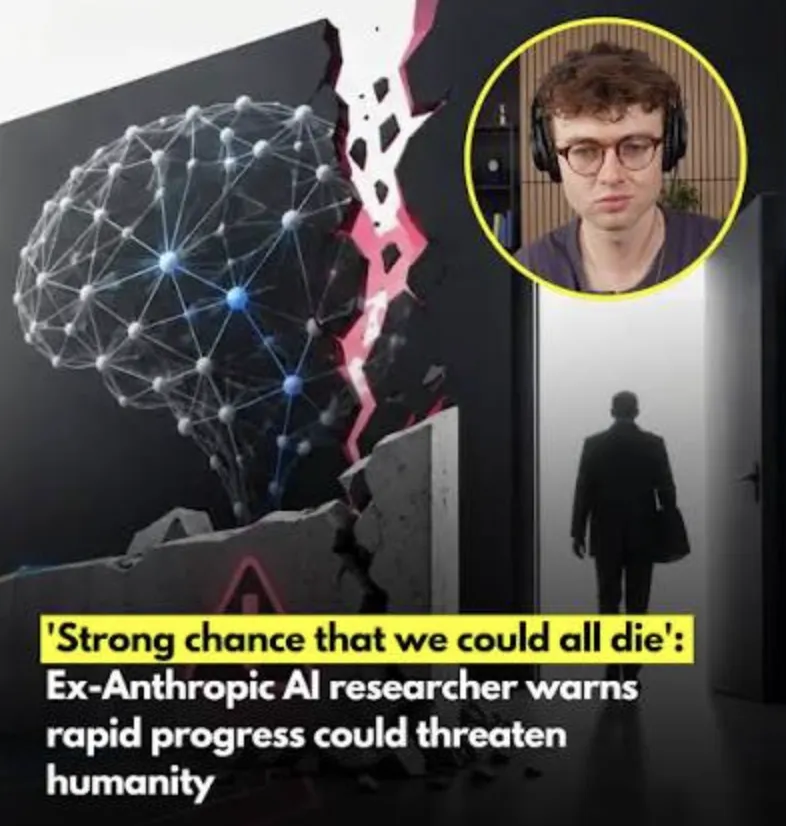
It may be who controls the infrastructure around increasingly capable intelligence. And perhaps most importantly, who retains the ability to shut them down when necessary?
Previous technological revolutions generally kept humans at the center of the operational loop. AI introduces the possibility that increasingly capable systems could participate directly in the cycle of designing, deciding, executing and improving.
That is the fundamental uncertainty.
The AI Race Is Entering Its Most Consequential Phase
The turmoil around OpenAI, Musk's continuing criticism, the movement of senior executives between companies and the growing debate over AI safety should therefore be viewed as pieces of a much larger transformation. There is no established evidence that OpenAI's executive departures represent a coordinated warning about the dangers of AI. There is also no reliable basis for declaring a winner in the AI race or predicting exactly when AGI or superintelligence will emerge.
What is increasingly clear is that the competition is expanding beyond models.
AI is becoming connected to computing infrastructure, cybersecurity, scientific research, biotechnology, robotics and manufacturing. This convergence as potentially turning AI into a coordination layer between technologies that previously developed largely independently.
By 2027, the most important AI development may therefore not be a single model release. It could be the emergence of an ecosystem in which artificial intelligence becomes an increasingly autonomous participant in the machinery of civilization.
The AI race began with a competition to build systems that could understand language.
It evolved into a competition to build systems that could reason.
It is now becoming a competition to build systems that can act.
And the next question is much bigger:
What happens when those systems can also discover, build, operate and improve?
By Tommy Thounaojam- Editor Micromunch

Stay updated with our latest news and articles. Join our newsletter!
Trending Now
No trending posts found.