
Nepal Floods 2026: The Disaster, The Response, The Relief Funding Flow
2026-09-02
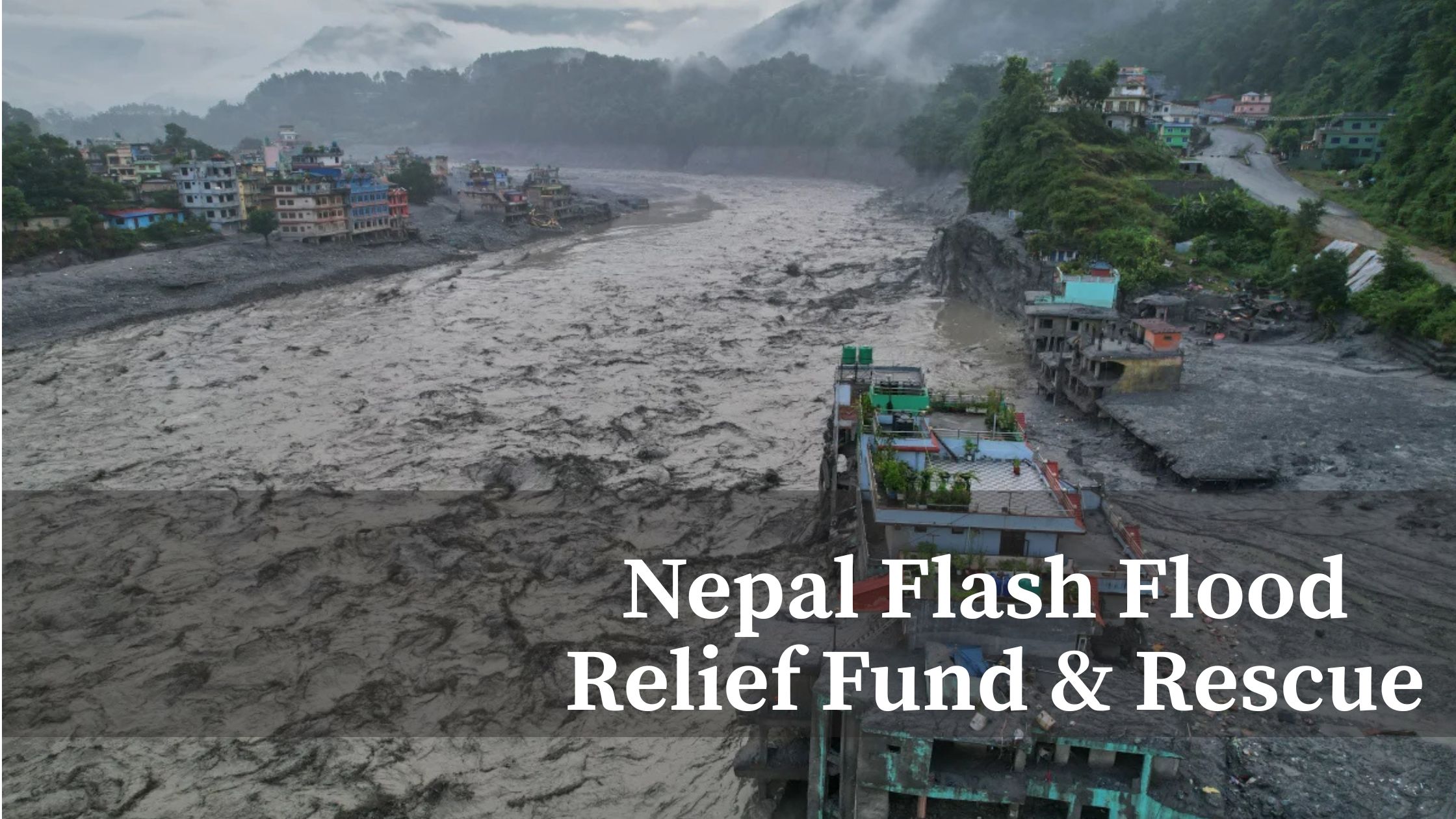
After the Assam flood disaster, the screens are now filled with images of Nepal facing one of the most devastating natural disasters in its recent history. A catastrophic flash flood struck the Bhote Koshi River system in Rasuwa, close to the Nepal–China border, before affecting downstream areas including Nuwakot and Dhading on 26 August 2026.
This incident has caused an uproar and loss of life and property. Why did Nepal experience this flash flood, what does the rescue look like, and what financial support are they receiving? Many questions, let’s explore.
What Caused Nepal's Catastrophic Flood?
While there is confusion surrounding why Nepal faced a flash flood, one should understand this disaster was not a conventional monsoon flood. The immediate trigger was a sudden release of water following a glacial collapse in the Himalayas.
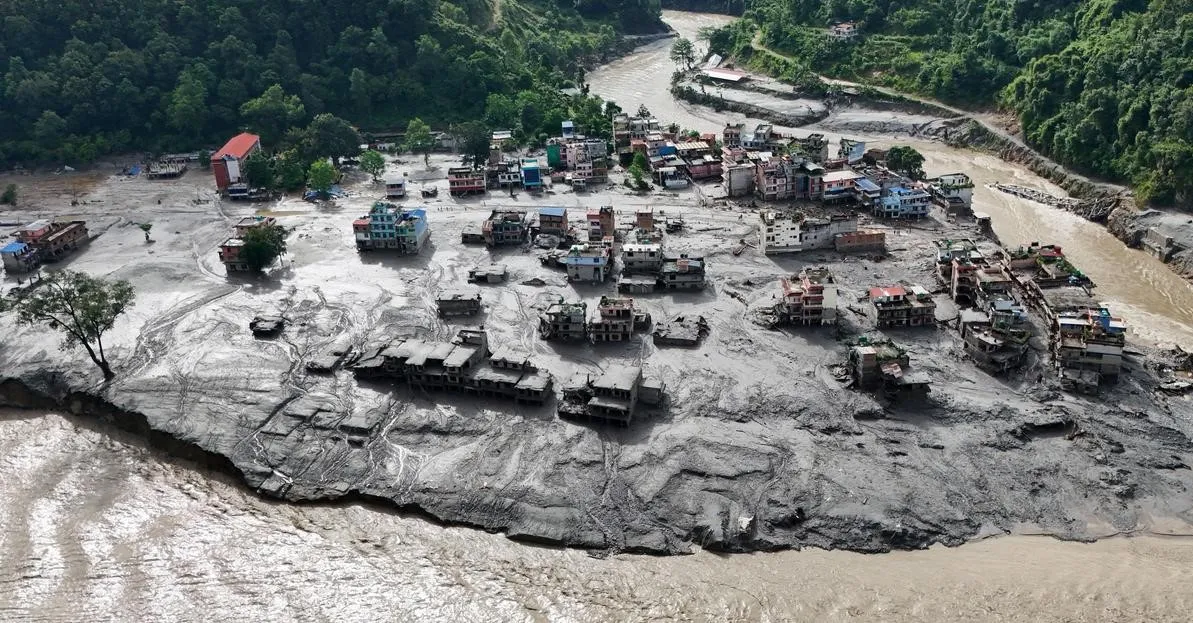
Reportedly, an avalanche of ice, rock, and debris entered the Lhende Khola/Bhote Koshi river system. Instead of a slowly rising river, communities downstream faced a rapidly moving wall of water and sediment, and the destruction was amplified by Nepal's geography. Yet the exact chain of geological events is still being investigated. The affected region is mountainous, with settlements, roads, bridges and hydropower infrastructure concentrated along narrow river valleys. Once the flood entered these corridors, there was little room for communities and infrastructure to escape its force.
As of September 1, the scale has become enormous: Reuters reported more than 1,000 deaths, roughly 4,000 people still missing, more than 11,000 people evacuated, and continuing rescue operations at hydropower facilities. Even the roads, bridges, homes, and power installations were swept away, while satellite imagery showed large areas transformed by rock, mud, and debris. This disaster has intensified concerns about the vulnerability of Himalayan communities and infrastructure to increasingly unpredictable high-altitude hazards.
What is the Nepal Flood Rescue Situation and Who is Leading it?
- Reportedly, Nepal’s flood rescue operation remains a large-scale national emergency following the August 26, 2026 Bhote Koshi floods.
- The Government of Nepal and its security forces remain at the centre of the operation to conduct rescue. The Nepal Army, Nepal Police and Armed Police Force have been heavily deployed for:
- Search and rescue
- Evacuation
- Helicopter operations
- Medical assistance
- Body recovery
- Clearing debris
- Reaching isolated communities
- Protecting and distributing relief supplies
- The Nepal Army is leading the core search, rescue and relief operation, working alongside the Nepal Police, Armed Police Force, medical teams and local authorities. Nearly 20,000 security personnel have been deployed as the operation has expanded, currently spread across the affected areas.
- Channels are covering neighboring country rescue operations that involve the following news:
- India has deployed 24 specialist tunnel-rescue personnel in two teams, working with the Nepali Army at Chilime and Langtang. India has additionally supplied forensic expertise for DNA identification.
- China has sent a nine-member specialist team working at Upper Trishuli 3A, while South Korea is also providing support.
- From a primary domestic operation, the rescue has therefore evolved into a coordinated international humanitarian and technical response, with Nepal leading.
- Reportedly, the Nepal Army has also been working with specialist teams on extremely difficult hydropower-tunnel rescues.
Why Was the Nepal Flood Rescue So Difficult?
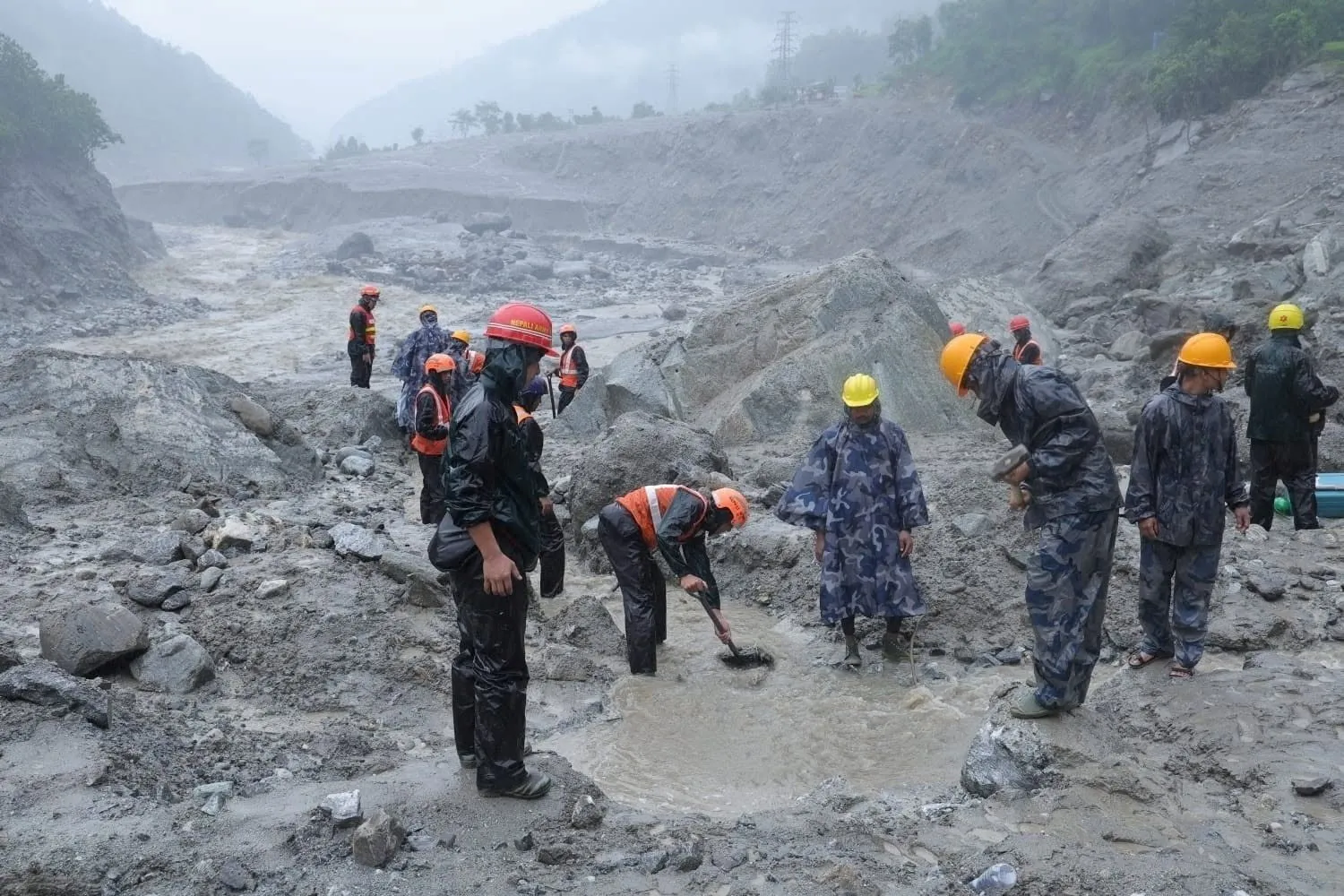
- The rescue became a challenge as the flood seemingly destroyed some of the very infrastructure rescuers needed to reach survivors.
- At least 19 bridges and roughly 40 kilometres of roads were damaged or washed away along the Trishuli corridor and adjoining highways.
- That created a difficult chain reaction; the problem is particularly severe at hydropower projects. Around 900 workers were initially reported missing at hydropower facilities, with hundreds believed to be trapped inside tunnels filled with mud and debris. Nepalese and foreign technical teams have been working to locate and reach them.
- Drones have become an important tool, particularly where roads are unusable. Thermal drones and satellite imagery are being used to search difficult terrain and identify possible survivors or accessible routes.
Nepal Flood Relief Funds Verified: International Rescue and Relief Efforts
Country / Organisation | Assistance | Main Purpose |
India | Relief materials, including more than 50 tonnes initially | Food, medical and emergency supplies |
UK | £5 million pledged | Humanitarian relief and emergency response |
United States | $500,000 | Emergency assistance and disaster-response support |
Asian Development Bank | $5 million grant | Food, safe drinking water, shelter, medicine and urgent relief |
United Nations | $2.5 million emergency funding | Immediate humanitarian response |
Australia | $8 million aid package | Emergency and humanitarian assistance |
EU | €2 million reported | Emergency assistance |
China | Emergency personnel and equipment | Search, rescue and technical support |
South Korea | Financial and technical support | Emergency response |
Red Cross/Red Crescent | Emergency response teams and supplies | Shelter, relief and community support |
* These figures represent announced commitments or assistance and should not be added together as if they are all cash. Much of the assistance is earmarked for particular organisations, programmes, equipment or relief operations. This is important because emergency funding isn't only about rescuing people from floodwater. Once people are evacuated, they need somewhere to sleep, clean water to drink, food to eat, and medical care.
How Much Money Is Nepal Itself Mobilising?
The Nepalese Government
- According to reporting by The Kathmandu Post, they have access to approximately NPR 20 billion ($140 million-plus, depending on exchange rates) from the current fiscal year's budget for emergency rescue, relief, and related needs.
- Reports also suggest incoming donations into its Prime Minister's Disaster Relief Fund.
- According to Nepal's Ministry of Finance, within just the first six hours after the appeal, approximately NPR 273.3 million had been collected, excluding international grants and assistance.
Nepal's Private Sector
One of the most notable aspects of this disaster has been the response from Nepalese companies and financial institutions. Reportedly, businesses are contributing both cash and physical supplies;
Company / Group | Reported Contribution | Purpose / Form |
NPR 150 million | Disaster relief | |
Chaudhary Group + Nabil Bank | More than NPR 150 million | Financial and material assistance |
NPR 50 million | Prime Minister's Disaster Relief Fund | |
NPR 52.9 million | Disaster relief | |
NPR 100 million | Disaster Relief Fund | |
NPR 25 million | Disaster Relief Fund | |
NPR 22.1 million | Disaster Relief Fund | |
NPR 30 million | Disaster Relief Fund | |
NPR 30.1 million | Disaster Relief Fund | |
NPR 20 million | Disaster Relief Fund | |
Ncell | NPR 10 million | Rescue, relief and rehabilitation |
NPR 10.1 million | Disaster Relief Fund |
* These are reported commitments/contributions and should not be interpreted as one consolidated pool of money.
Companies Doing More Than Donating Money
Chaudhary Foundation and Nabil Bank
- Reports suggest the Chaudhary Foundation and Nabil Bank announced a relief and rehabilitation programme worth approximately NPR 150 million.
- The first phase includes food, drinking water, clothes, tarpaulins, hygiene products, and other essential supplies.
- Also establishing relief camps in Rasuwa and Nuwakot, with meals, clean water, sanitation, and child-friendly spaces, setting an example of direct assistance.
Ncell: Money Plus Communication
- Communication itself is a rescue tool; taking that further, Ncell announced NPR 10 million for the Prime Minister's Disaster Relief Fund.
- It also provided affected customers with free voice & data services, and 100 free SMS for three days, helping families communicate and enabling contact with rescue teams, reminding disaster relief isn't limited to food and blankets.
What Is the Money Actually Being Used For?
Need | What Funding Supports |
Search & Rescue | Helicopters, equipment, drones, specialist teams and evacuation |
Food | Emergency meals, packaged food and nutritional supplies |
Water | Drinking water, purification and sanitation |
Shelter | Tents, tarpaulins, temporary accommodation and relief camps |
Clothing | Replacement clothes and essential household items |
Healthcare | Medicines, medical teams, emergency treatment and hospitals |
Hygiene | Sanitary products, hygiene kits and sanitation facilities |
Children | Safe spaces, education support and child protection |
Communications | Mobile connectivity and emergency communication |
Infrastructure | Temporary bridges, road clearance and restoration |
Rehabilitation | Housing, livelihoods and rebuilding communities |
- Reportedly, the UN response is being organised through clusters covering areas such as health, shelter and food, allowing different agencies to coordinate their assistance with Nepal's government.
- UNFPA, for example, has mobilised 2,000 dignity kits for women and girls and deployed mobile health units and reproductive-health supplies.
- UNICEF has reported that approximately 17,000 children urgently need humanitarian assistance. Flooding destroyed 18 schools and damaged another 20, according to AP.
What Happens After the Nepal Flood Rescue? The Financial Aspect Of Reconstruction
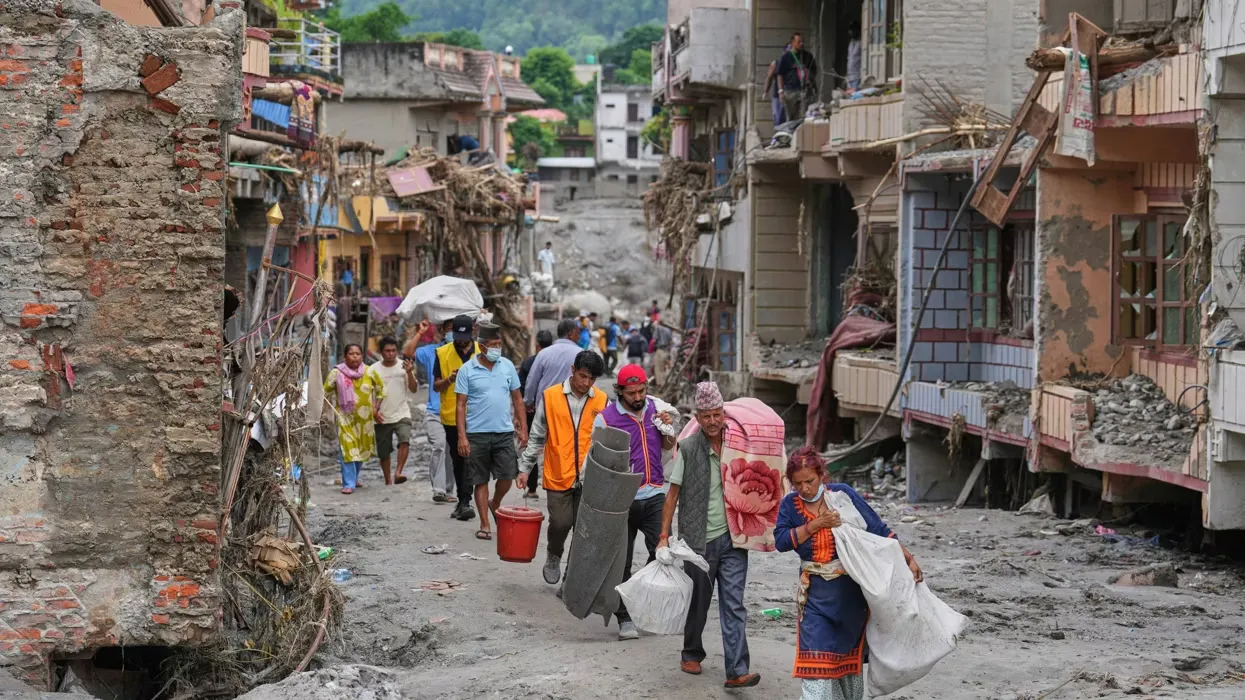
- This could become the most expensive part of the crisis because rescue is immediate and currently ongoing, but reconstruction is long-term.
- The disaster has damaged roads, bridges, hydropower facilities, homes, businesses, and communications infrastructure.
- Reuters reported that reconstruction costs could reach approximately $4–5 billion, equivalent to close to 10% of Nepal's economy, and the time needed to re-establish all the systems is yet to be estimated.
- The hydropower damage is particularly significant because electricity generation is central to Nepal's economic strategy.
- Reuters reported that the disaster affected around 431 MW of electricity-generation capacity, equivalent to roughly 10% of Nepal's generation capacity, forcing the country to halt some electricity exports and increase imports from India.
- So the financial consequences extend far beyond humanitarian relief. Nepal may receive hundreds of millions of dollars in emergency assistance, but the estimated reconstruction bill is potentially several billion dollars.
- That means the country will eventually need to move through three financial stages:
- Stage 1 Rescue: Money goes toward helicopters, rescue teams, medical assistance, evacuation and emergency operations.
- Stage 2 Relief: Money goes toward food, water, clothing, temporary shelter, medicine and sanitation.
- Stage 3 Reconstruction: Money will be needed for roads, bridges, hydropower facilities, homes, schools, businesses and resilient infrastructure.
Frequently Asked Questions:
What is The Nepal Flood Rescue Focus?
Ans) Nepal’s current flood rescue focuses on finding missing people, evacuating survivors and reaching isolated communities after the catastrophic August 2026 floods. The Nepal Army, Police and Armed Police Force are leading operations, supported by helicopters, drones and international specialists. Food, clean water, shelter and medical assistance are also immediate priorities.
How to help Nepal flood victims?
Ans) The safest way to help is through verified humanitarian organisations, government relief funds or established charities working directly in affected communities. Donations can support emergency food, drinking water, medicines, temporary shelter, hygiene supplies and longer-term rehabilitation. Avoid sending money or supplies through unverified social-media appeals, as disaster scams can increase during emergencies.
Why does Nepal flood every monsoon?
Ans) Nepal's geography makes it highly vulnerable to seasonal flooding. Heavy monsoon rainfall, steep mountain slopes, landslides and fast-flowing rivers can rapidly increase flood risks. In the Himalayas, glacier and glacial-lake instability can add further hazards. Urbanisation, settlement near rivers and vulnerable infrastructure can worsen the impact of extreme rainfall and floods.
The Concluding
We see the response to the 2026 floods has become a combination of government power, military capability, international assistance, humanitarian organisations and private-sector money. But the scale of destruction means rescue is only the beginning. Nepal now faces a difficult transition from finding survivors to rebuilding lives. The catastrophe has also revived questions about disaster insurance. Reuters reported that Nepal's reconstruction costs could approach 10% of its economy, highlighting the country's exposure to climate and geological risks and the limited availability of disaster insurance.
While the generosity already flowing into Nepal can help people survive the disaster, the much bigger challenge will be using the lessons and the money to ensure that when the Himalayas send another warning, communities are better prepared to withstand it. The tragedy in Nepal demonstrates how interconnected climate, geography, infrastructure and finance have become. This is why disaster management is increasingly becoming an economic planning issue, not simply an emergency-services issue.
P. Manika (Performist Content Writer)
Disclaimer: The article is written from secondary sources and the articles available; it is not a direct analysis.

Stay updated with our latest news and articles. Join our newsletter!
Trending Now
No trending posts found.
Related Articles
Debug: Tags used: Nepal flood relief, government of Nepal, Nepal flood relief funds verified, Nepal flood updates